When arriving in Bengaluru, India, for my exchange program, I fielded a lot of comments from wise family and friends that I should write a blog to keep a record of this once-in-a-lifetime experience. Whether it was laziness, the time required to settle in, or an unexpected gallbladder surgery (a future blog topic—no doubt), I put off the thought for nearly half of my 11-month stay. However, some experiences have been so impactful and so moving that I can’t help but feel the need to record them for my future self. Be it a pigeon landing on my foot in a moving vehicle, an unexpected fondness for street cats, or the 6:00am sponge bath I received after said gallbladder surgery, I’m so lucky to experience such exciting and unexpected adventures in my daily life. However, for me, it was the excitement of a mundane task—a post office visit— that you lucky readers can thank for inspiring me to document my experiences.

My visit to pick up a belated Christmas package from India Post sits within a storied history of mail delivery in India. India Post has very conveniently documented this history on its website. Postal services in India go back to 250 BCE when the Maurya Empire used pigeons to communicate between the capital and provinces. Ashoka the Great, namesake of the chakra (wheel) on India’s flag, also used pigeons when he led the Maurya Empire. One thousand(ish) years later, under Mughal rule, horses and foot runners delivered mail across the vast empire. In the Mysore Kingdom, home to present-day Bengaluru, 17th-century post runners were equipped with spears to fend off wild animals when running mail through remote regions (Image Source: Deccan Herald). These mail deliverers ran so that in modern-day Bengaluru, an American girl could receive gluten-free Oreos shipped from Florida.

Today, India Post is the largest postal network in the world, processing mail for the world’s most-populated country across over 150,000 post offices. The scale is especially incredible considering that most of the country’s 1.4 billion residents live in rural areas, with terrains ranging from the world’s tallest mountains to tropical jungles. In addition to zip codes and formal addresses, there is a practice of using landmarks to help describe/locate an address, even in official correspondences. This practice extends to my highly urban neighborhood, like when my electric company asked for a landmark, e.g. “by this temple.” Behind the pure logistical marvel, the most touching aspect of my post office visit, which I will eventually describe, was the staff’s passion for the scale and importance of their work across such a diverse country.
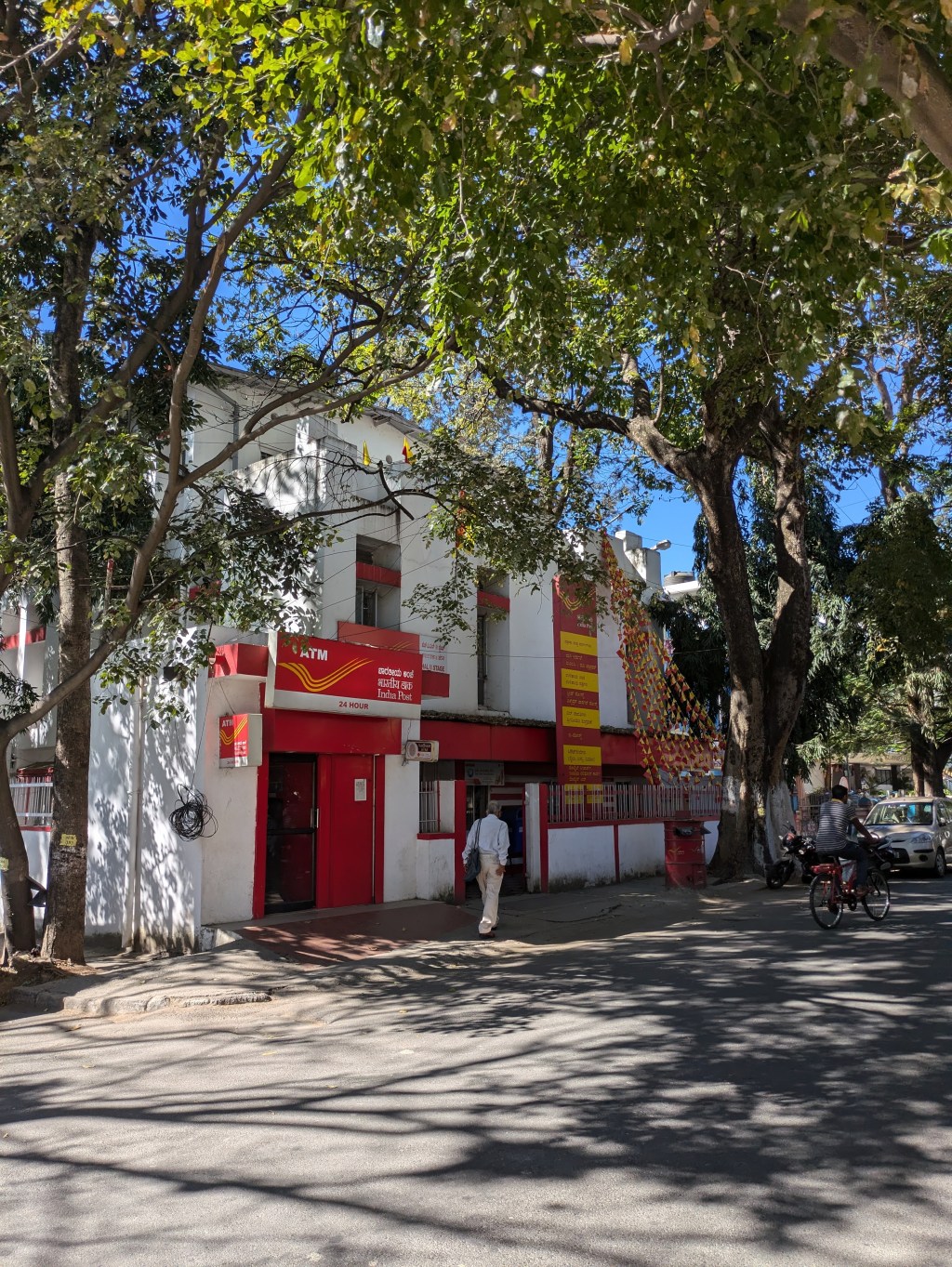
My post office journey began with a Christmas gift box from my parents in Florida. After an overseas journey and a long stop in customs, I received a note from my local post office that the package had arrived around a month after it was shipped. Unfortunately, the package arrived the week of my surgery, so the courier left a note indicating which post office had the package. Fast forward a few more weeks, and I finally made the trip to receive my belated present from the post office on one of the most charming streets in my neighborhood (also home to a mysterious but intriguing chess class).
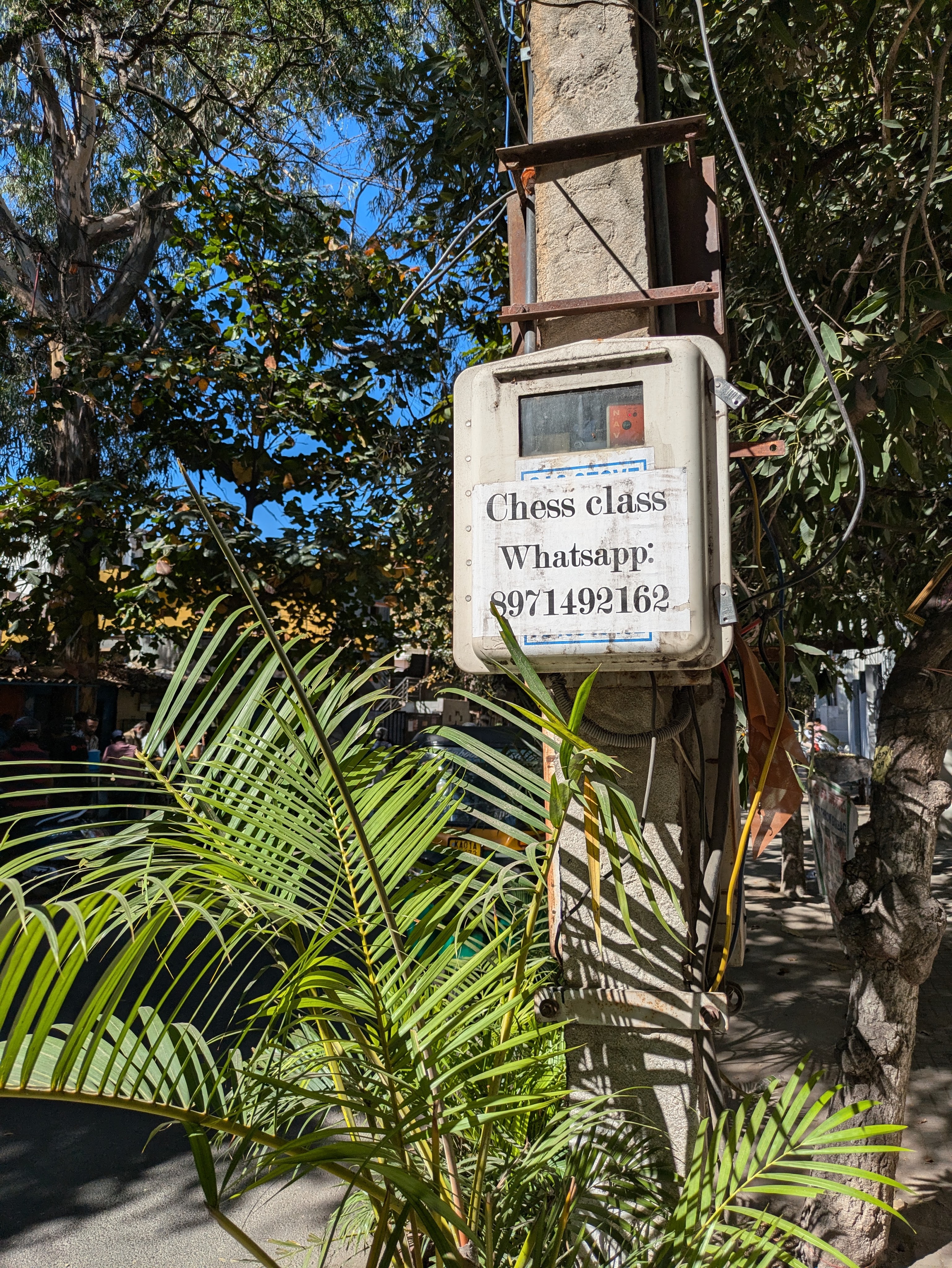
The experience highlights two key themes of my experience in Bengaluru: 1. bureaucratic processes do not compute in my American brain, but boy, is the customer service excellent, and 2. there is a beautiful wealth of kindness towards visitors who express interest in local culture.
Upon arrival at my local post office, I was sent back to the room where mail is actively being processed [India Post, I’m happy to redact this line if needed]. The post officer asked me for my address and package details and asked if it was a large package. In whatever good spirits I was in, I responded with a subtle nod to my Kannada language learning, yes, ondu dodda package ide. Shocked that I had taken time to learn a few words in Kannada (once again, a topic for a future blog post), the post officer gradually started asking me about my experiences with Kannada while looking up package details. Word of the American speaking Kannada spread through the mailroom, and one by one, excited mailroom staff came to chat with me and test my language skills. The most common greeting in Kannada is “tindi/oota aita?” meaning “Did you have breakfast/lunch?” depending on the time of day. Word quickly spread around the post office that I had failed to eat breakfast that morning, much to the concern of the kind staff I had just met. When I return to Texas this summer, I’ll feel slighted when no friends check in on my breakfast status.
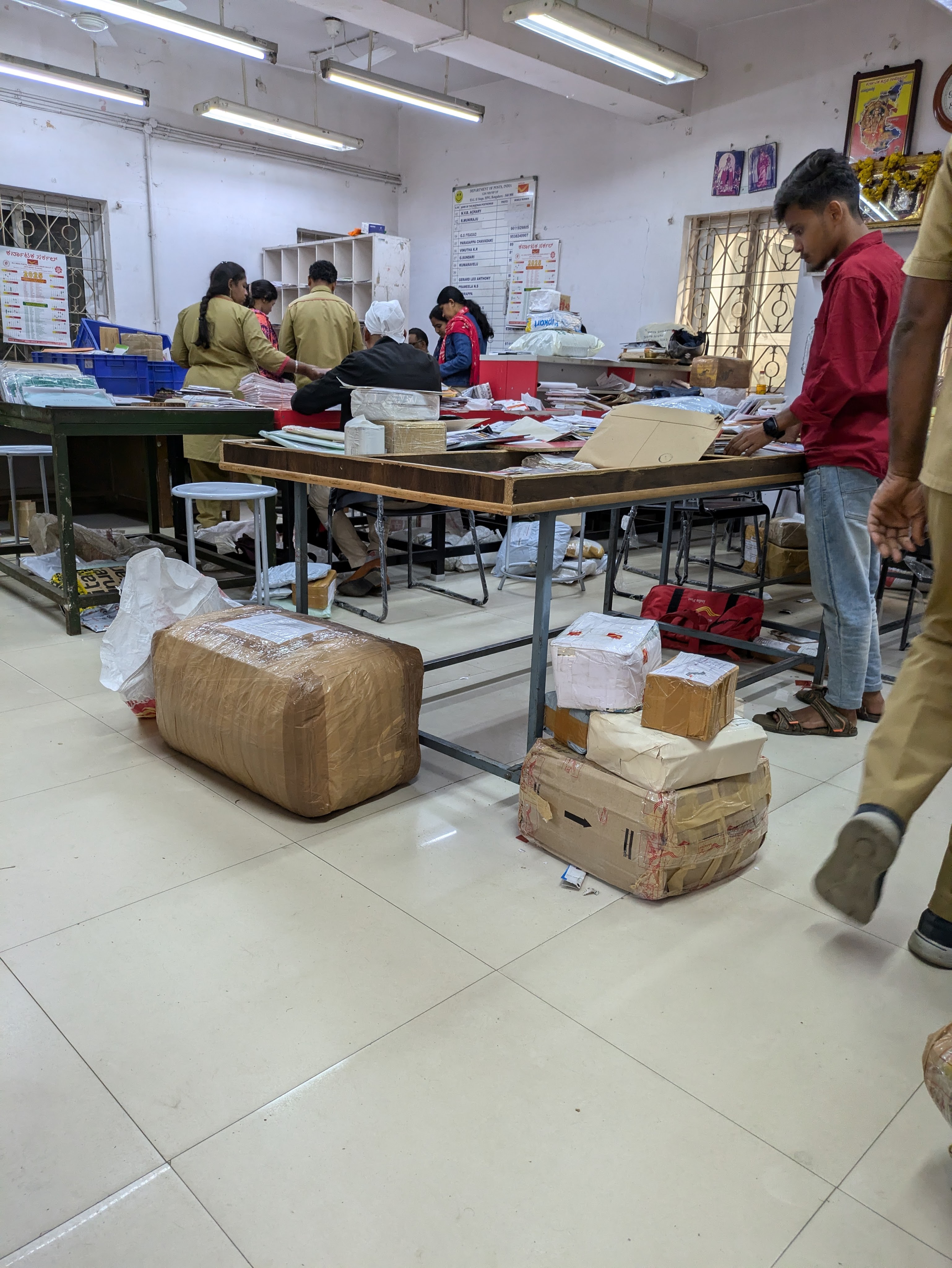
Due to my initial failure to pick up the package within 7 days of the delivery attempt, my local India Post sent the package back to an international processing center across town. To get my package back, my friendly post officer instructed me to handwrite a letter explaining that I was not available when the package was delivered. I would then give this handwritten note to the branch postmaster, who would contact the international processing center. I wrote my letter in the postmaster’s office while they were in a meeting. When the postmaster and (vice?)postmaster came in the room, they were once again so thrilled about my interest in Kannada that they opened up with questions and stories about the Indian Postal system. A string of other visitors came in, including the postmaster of a nearby post office that happens to be the first 3D-printed post office in the country— an India Post celebrity!

While they were making multiple phone calls to the international processing center, the postmaster team offered me tea, welcomed in another wave of staff excited to chat with me, including two staff members from other regions of India actively working to learn Kannada, and even gave me a local sweet for that week’s religious festival. I am a big fan of USPS, but I can not imagine a scenario where I receive any food or beverage while mailing a package back home. The postmaster team told me how excited they were about the innovation and scale of the postal system, from the 3D-printed building to the ability to scale an operation across such a large country. The pure joy and respect for such an important public service nearly brought me to tears.
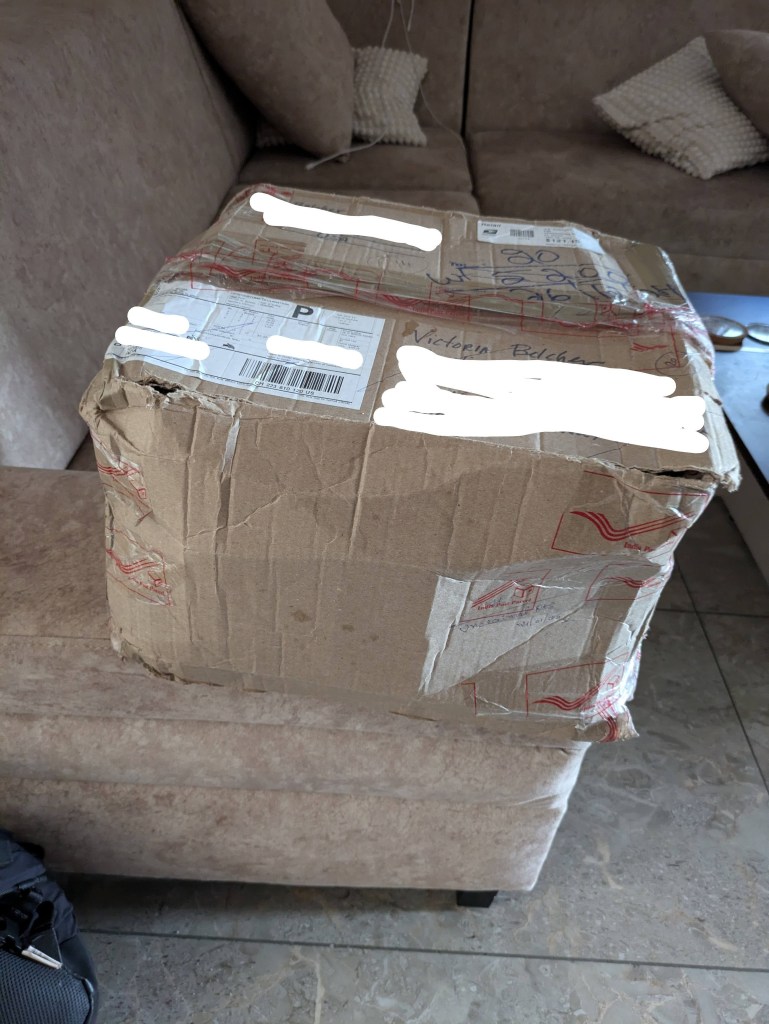
After the round of phone calls and whatever my handwritten note was for, they let me know to come back the next day. I quickly waved goodbye to my friends in the mailroom and set off for home. The following day, I received a call that my package had been returned. When I arrived, my mailroom friends said they had been waiting for me and handed off the admittedly lumpy box that had seen two months of travel across the world. I told the staff how excellent their service had been and gave a celebratory cheer to the postmaster team on my way out.
If this experience wasn’t enough, the memory of paying nearly 80 dollars to mail my absentee ballot via a private courier last November has made me a complete convert to the amazing institution that is India Post. I feel so fortunate for this study abroad, to be able to pick up a package, and to learn a new language. Sharing this fun experience with my local post office team solidifies the joy that can exist in my daily life in Bengaluru. To friends reading back home, I’ll happily accept letters/packages and any excuse to go back to my favorite post office 🙂

Leave a comment