In Bengaluru, I have the privilege of working with an NGO called Paani Earth Foundation that works on information access to support the health of river systems in Bengaluru. While some days at the office are more standard, meetings, report writing etc, the past few weeks have been full of unique experiences from conducting biosampling in the Arkavathi River (looking for what I described as “gross little bugs,” launching an exhibit at the city’s science museum, and conducting a field visit to another state to visit an urban river restoration project. Restoring rivers in Bengaluru is complex, and sometimes it is easy to get discouraged by the state of pollution and seeming lack of action. The following piece is a personal reflection from our visit to the Kham River in Aurangabad and how these lessons can be applied in Bengaluru.
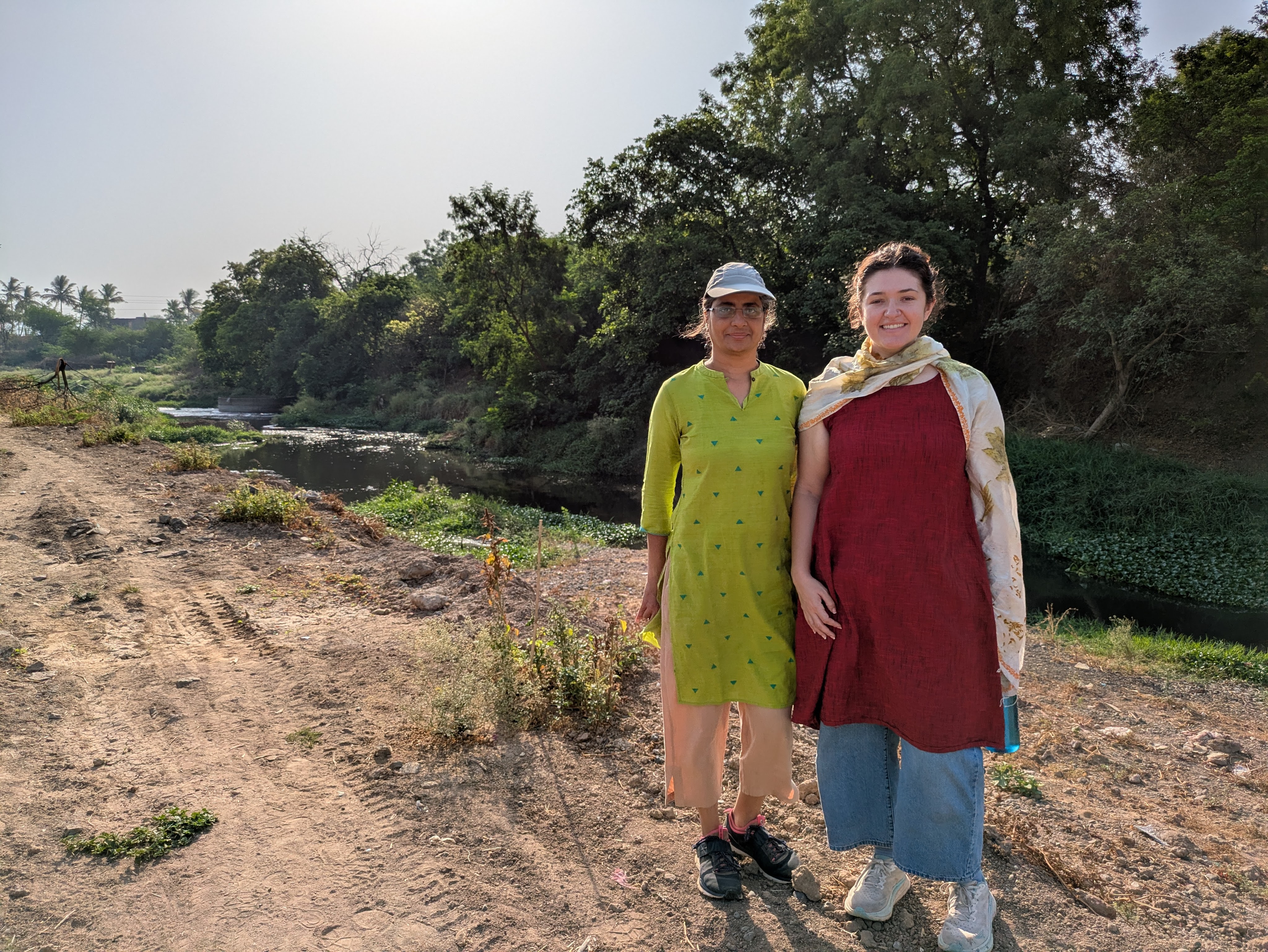
Kham River Restoration Reflections
Villages downstream of India’s urban rivers typically tell the same story: decreasing crop yields, increasing health challenges, and a feeling of powerlessness in the face of harmful pollution from upstream. In one generation, Bengalureans have seen rivers shift from a place of play and joy to toxic bodies of water from which locals wouldn’t even eat fish. The urban river by my office, the Vrishabhavathi, is called a mori or nala, as it now flows with waste and sewage as opposed to the perennial rains of the monsoon. The sewage and harmful pollutants from Bengaluru’s urban core rush to villages and small towns downstream, with limited recourse for help. However, in Narayanpur village, just 20 kilometers downstream of Aurangabad (Chhatrapati Sambhaji Nagar), I saw a different story, one of improvement and community investment in local water. On a recent visit to learn more about the restoration of the Kham River, the Gram Panchayat (local government head) shared a scrapbook of photos showing community members, young and old, working to clean the river. ASHA community health workers told stories of a true shift in the community’s commitment to health.

Last year, EcoSattva completed the initial restoration of the Kham River’s urban stretch, a 65km perennial river flowing through Maharashtra before it joins the Godavari. This restoration, which has now received international recognition from groups like WRI, started in 2020 when the community hit its limit with the trash-laden state of the river. Community and city-led groups initiated changes, and Varroc Industries provided funding for Ecosattva to begin an initial pilot study. Over the next few years, the results showed that restoration extends past just one stretch of a river, but requires a comprehensive change in the whole river catchment. For Kham, interventions immediately in the river included additional treatment plants and filters to catch debris. One step further, on the banks of the river, citizens planted trees to protect the river from erosion and Ecosattva created a park spaces to preserve the area and create opportunities for connection with the water. Finally, the beauty of this project was a catchment-level approach. The municipal corporation increased waste and textile processing capabilities, citizen outreach, and education. A network of thousands of volunteers committed to cleanups. With the initial work in the urban core largely completed, Ecosattva entered into agreements with over 20 downstream villages to begin localized restoration efforts.

Efforts in the Kham River played to the local strengths present in Aurangabad to drive change. Some of these strengths were smaller and hid under the radar, like appointing a retired Municipal Corporation Administrator for a special assignment to lead municipal cleanup activities. This administrator and a small team have silently worked on river desilting and bank restoration through four government changes. Another major factor was leveraging the existing protections for rivers and waterways in Aurangabad and Maharashtra. While the state’s River Regulation Zone (RRZ) policy was halted in 2015, the urban stretch of the Kham River was largely undeveloped due to its presence in the military cantonment area. This gave Ecosattva and other contributors more space to work along the river. Finally, Ecosattva had years of experience in solid waste management before beginning coordination efforts for the Kham Restoration. With increased scope for the river restoration, Ecosattva expanded their treatment facility network and addressed waste at a catchment level.
Cleaning a polluted river takes years, and engagement will ebb and flow over time and government changes. Moreover, significant challenges remain to tackle, like industrial pollution, which primarily impacts villages. However, techniques like creating a Kham Song, forming clubs and organizing events along the river, and effective social media and marketing strategies continue to drive connection and the restoration work both in urban Aurangabad and beyond.
Bengaluru is a city full of innovation, financial capital, and, historically, a deep connection to our water systems. If we connect these abundant resources and focus on the entire river catchment instead of piecemeal solutions along individual lakes or rivers, we can see a transformation like Kham. This task will require alignment across academic, government, and business partners and strong citizen support. However, compared to the cost of larger government infrastructure projects, investment in a clean river is one with immense returns for our city and its future. Moreover, with the increasing innovation of local companies in water treatment, we may not even look outside Bengaluru for solutions.
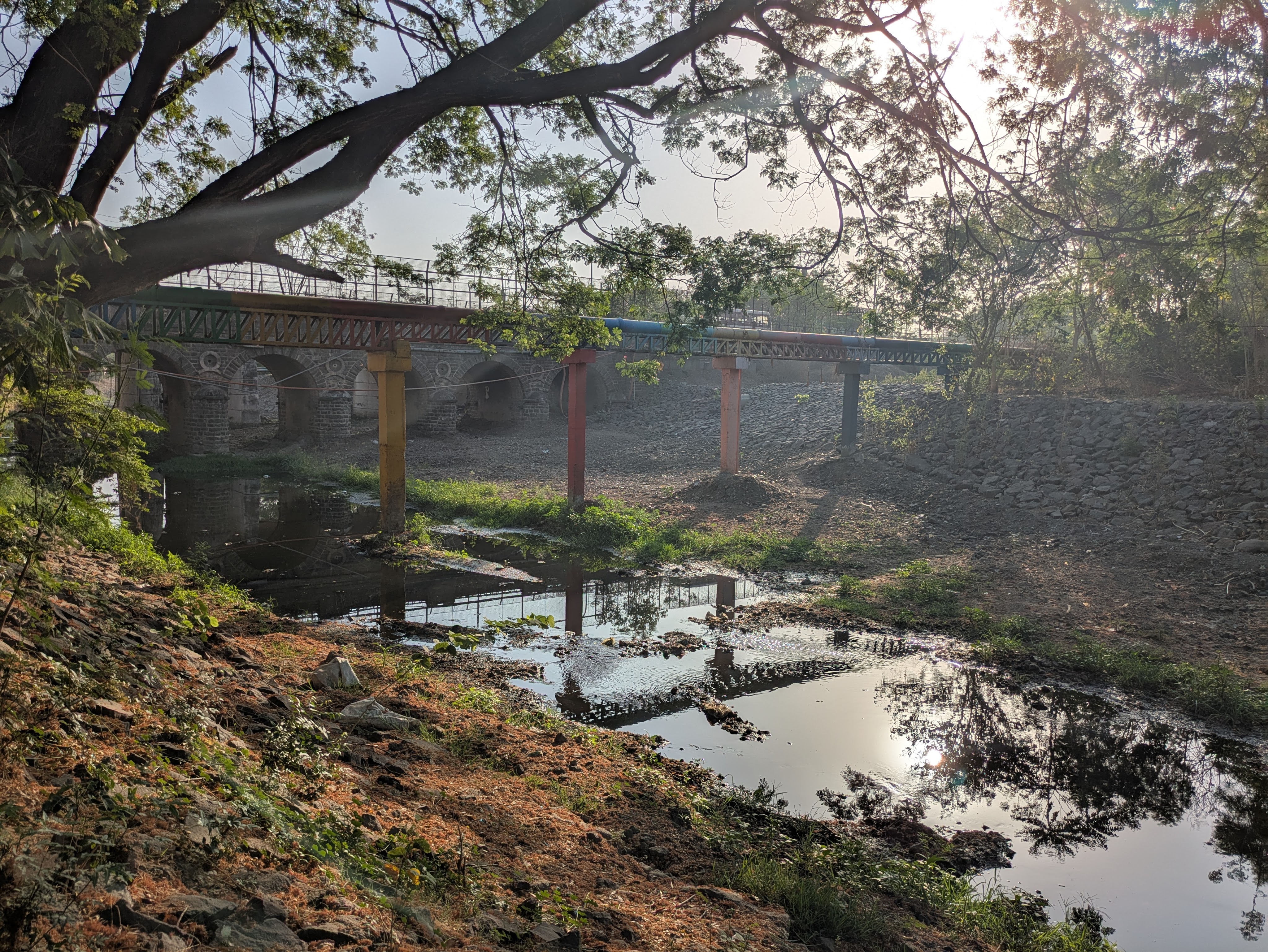
Kham shows that restoring a river is a lengthy process and that perfection is an unattainable goal. However, starting and making gradual improvements can still have an outsized community impact. Cross-city partnerships, such as between Bengaluru and Aurangabad, can create knowledge-sharing opportunities to help advance these projects in the Indian context. Most importantly, Kham tells us that urban perennial rivers are not fated for a destiny as sewage drains. This pollution can be reversed, or at least managed, to restore life to these spaces. Restoring life and imagining rivers as a source of joy requires us to step up.

Leave a Reply