Ellarigu Namaskara!! After a whirlwind summer and some much-needed downtime with my parents, I am back in Texas. This post is the first of a few post-Bengaluru reflections. The last year was transformative to say the very least, and now begins the fun of connecting the dots with all these learnings as I finish my thesis and last semester of grad school. I was honestly nervous to come home, but I’ve been so pleasantly surprised with the level of curiosity, interest, and general non-judgment my friends and family have shown. From their questions about the food, politics, to how I got around in a megacity, I’m reminded of how relatively quickly living in a completely new place and culture began to feel normal. To kick off these reflection posts, this blog is an analysis of the running list of cultural/societal differences I kept on my phone over the year. These categories are neither comprehensive nor scientific, but they aim to capture how I viewed my daily life as an American in Bengaluru.
People People People
Bengaluru is by far the most culturally different place I have been from Texas. The city is extremely multi-cultural and multi-lingual, with residents from every state of India and many other countries making up the population of 14~ million. This multi-cultural environment helped to ease my transition and allows for the use of English in many parts of the city, and also exposed me to many new festivals and traditions from across India. Through my work, I was lucky to interact with people of so many different ages, professions, and backgrounds and my observations were mainly around different social norms, like what is acceptable to do or say in a conversation. My notes:
- People are genuine and very curious. Moreover, curiosity and openness are encouraged and normal. If someone had an interest in where I was from, they’d ask. Alternatively, if someone told an American they were from Mars, we’d probably be like “oh that’s nice” and ask no further questions
- On a semi-related note to curiosity, the acceptable time duration to stare at someone/something interesting in public is a bit longer than in Texas
- As a guest, you can take a nap in someone’s house. As a proud napper, I loved this. Overall, there is less of a rush to leave and less fear of overstaying your welcome
- Be prepared for lots of advice, both when and when you don’t ask for it
- At panels and professional presentations, longer answers are generally seen as better
- People take lots of phone calls for both work and family. Work texts/whatsapp messages often extend after hours and into weekends

Around Town
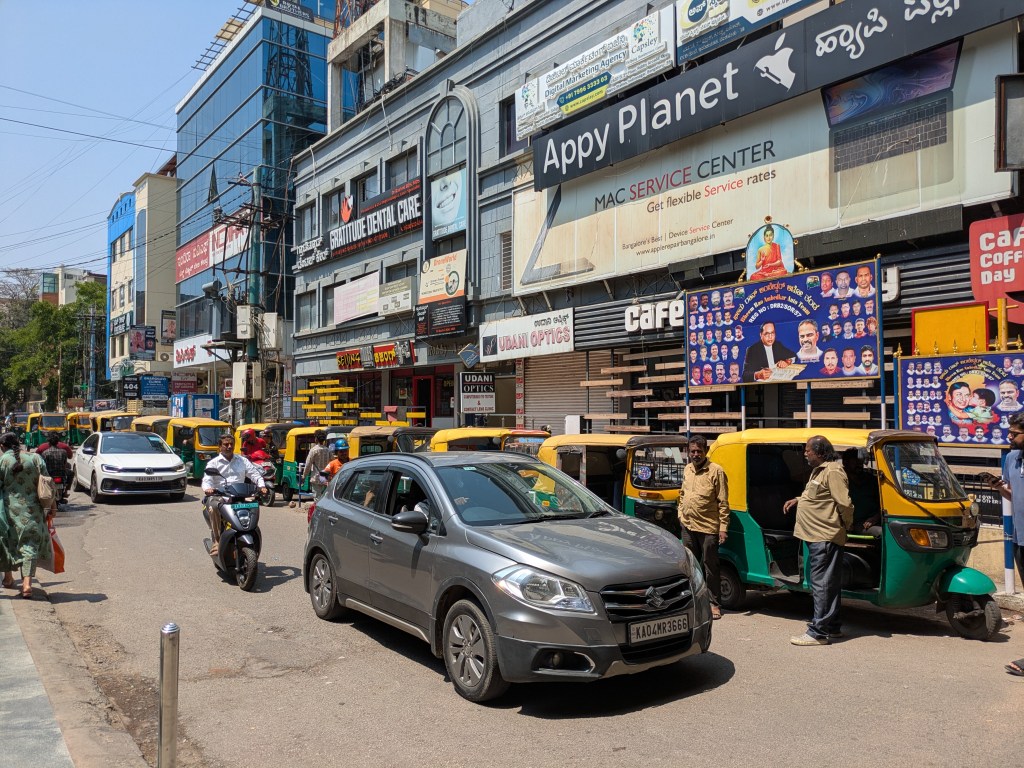
As an urbanist, I probably should have led with this category, but the way urban space is set up in a city like Bengaluru is shaped by and shapes culture. My street was tucked away off a major commercial road and host to kids playing cricket in the summers, a convenience store, and a small tailor shop alongside apartments. Like Austin, or most growing cities, I felt that commercial and newer developments generally lacked this same soul. Still, the overall experience of walking on the street, from the street dogs to the tea stands, made it clear that I was in a unique place, and in Karnataka. Here are some of the things I felt or saw walking around town:
- Development is mixed-use, very dense, and zoning is basically non-existent. There were like two butcher shops with live chickens within a few hundred feet of my apartment. The flip side of this is that nearly anything you can imagine is within walking distance if you live in central Bengaluru
- Lines or queues are not so structured and crowded restaurants will often have a pretty large mass of people you need to assert your way through
- Tons of small stands and cafes sell chai that people drink on the street from small cups. This is equally a midday tea break as it is a post-night out ritual
- I wasn’t sure what category to put this in, but public bathrooms have hoses and buckets for cleaning oneself. Bathrooms are simultaneously cleaner and so much wetter than what we are working with in the US
- Queer events/spaces/communities like Pride exist, but would generally be more like one-off events and concentrated mainly in more affluent neighborhoods
- I expected this in temples, but many stores ask that customers take off their shoes before coming inside. You’ll see stands with sandals and shoes outside storefronts all over the city
- Smoking cigarettes is far more common than in the US, and more restaurants have smoking sections
Food & Bev
I’ve talked about it before, but food was such a big point of conversation and holds such cultural importance that “did you have breakfast” is a greeting in the Kannada language. Bengaluru is massive. If there is a type of food you can imagine, there are probably multiple restaurants serving it. However, South Indian food, which is more rice-based and a bit lighter than the typical fare at Indian restaurants in the US, was the star of the culinary scene. As a lazy cook and lover of trying new things, I had a blast eating at restaurants and trying thalis (plates containing many different dishes). A few things I noted:
- Typical South Indian meals are eaten with your hands. This includes yogurt (curd), curry, and very watery stews (sambar) on top of rice, that were a big learning curve for me
- If you go to someone’s house as a guest (even for short period of time) be prepared to be given large amounts of delicious homemade food. Early on in my stay, I was given three full plates of rice with a meal and powered through to finish them
- There is a big distinction and emphasis on home food vs “outside” food, and folks tend to prefer home-cooked meals both for taste and health
- As part of home food and an emphasis on fresh meals, upper middle class+ folks (including people working in tech) will hire a home cook (I’ll add more nuance to this later) to prepare meals on a daily basis
- Food in Bengaluru is very cheap (coming from USD), but I found that alcohol is pretty heavily taxed, considering Bengaluru is India’s pub capital

Miscellaneous but fun
Without major analysis, here are some more niche things I observed:
- I cannot verify this, but I think there are statistically more fish tanks per capita. My tiny gym had one
- Talent shows and public performances seemed far more common. Throughout my year, I had to sing a cappella in front of a crowd on multiple occasions, and had managed to go my whole life without doing so before arriving in Bengaluru
- Schools display giant posters featuring photos and test scores of their top students, known as “toppers.” In general, there are a lot more photos of real people around town. In the neighboring state, Tamil Nadu, this includes epic signs for upcoming weddings that look like movie posters (see photo)
- Lots of places like the gym or a simple canteen have a communal cup for people to waterfall drinking water into their mouths. I lack the coordination for this

$$$
Okay, I admittedly ignored these when writing my phone list, but money was too big a cultural element to exclude. My consensus is that, compared to the US, physically spending money is far easier, but getting authorized or having the privilege to spend money (e.g., opening a bank account is harder). Some key things I saw:
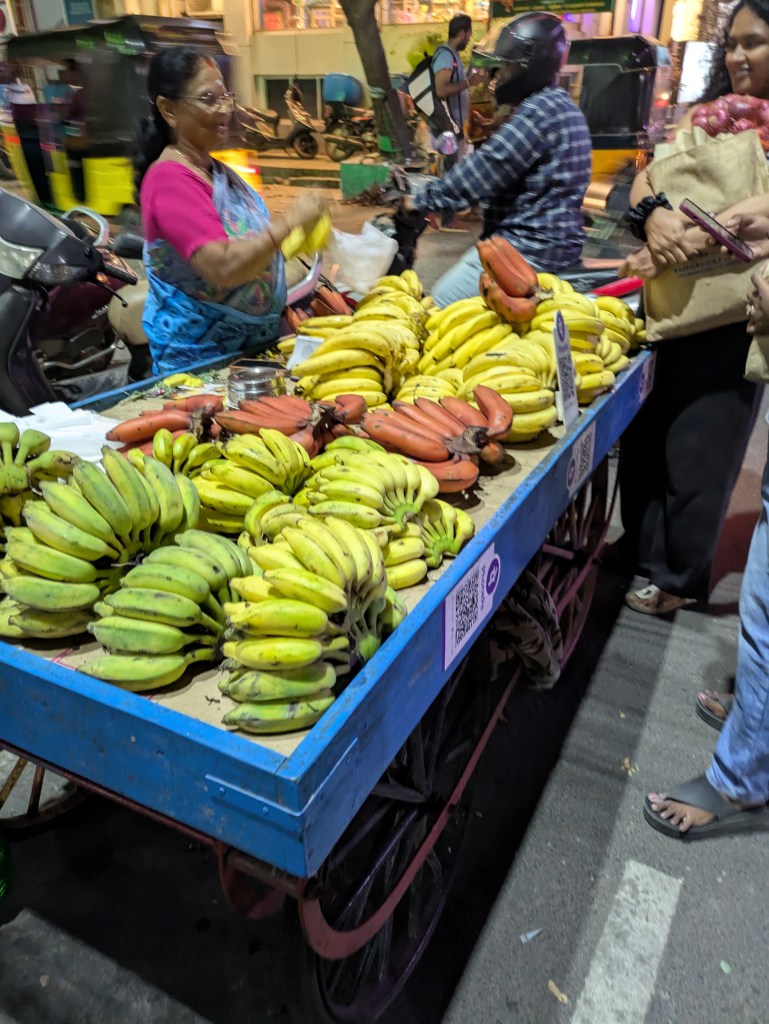
- Nearly all day-to-day transactions are done through payment apps called UPI. Any bank will have one, and big tech players like Google, and even phone companies have them as well. UPI is like an easier Apple Pay, you can use it to buy fruit from a street vendor (see QR codes in photo)
- Banks have to verify you through a process called “Know Your Customer” or KYC. This can involve bank employees visiting your home address to verify your residency. The concept of KYC sort of touches on broader issues of citizenship and formality, but for this purpose, I felt like it was pretty hard to open accounts
- Poverty feels a lot closer or more casually intertwined with daily life. Frequently, cooks, maids, and other jobs in the informal sector are paid in cash by upper-middle-class+ employers. For example, I hired a maid who came multiple times a week. There is a big range in the quality of life that these jobs afford, and living conditions can be precarious
Big ones
For those of you who made it this far, here are a few of the big big differences in life and culture that I am genuinely just beginning to scratch the surface of after ten months. My astute friends back home have also been most curious about these topics. My background informs my perspective, and this list is more of a jumping-off point for further conversations. These are some of the most markedly different and important observations from my year:
- Things operate at a scale and volume that was hard for me to comprehend. Temples optimize their operations to feed thousands of people quickly on a given night. Certain festivals are attended by millions. Somehow, it usually all works
- At this scale, getting things done requires a deep understanding of the flow of life, when to abide by or ignore bureaucracy, and frequently, a lot of persistence and double-verification that a task is complete
- Even in a huge city, the influence of religion and caste on identity and daily practices is undeniable and not always subtle. Religious groups and castes are often concentrated in certain neighborhoods or have a larger presence in a certain professions. There are dating (arranged marriage) apps where users can functionally filter matches based on caste. Even your name could indicate your caste, and more obviously, your religion. This system is complex, and there are many avenues for discrimination in housing, professional, and social environments, even with legal protections and measures like affirmative action for university admissions
- As an extension of the above, the food that people choose to eat, particularly if it is “veg” or “non-veg” is highly reflective of religion, cultural practices, and wealth. It is a common question folks ask when searching for roommates or tenants in an apartment. People frequently asked me this question
- Protections and concerns for safety, particularly against gender-based violence, are visible from security checks at the metro to assigned seats for women in public transportation. I felt very safe walking around town, but was always aware of my location within the bus, and preferred to travel in the women’s car in the metro
- Finally, coming from an individualistic to a communal culture, there is a lot more involvement and family/friend pressure in both day-to-day decisions and big decisions than in my life growing up in the US. From the outcome of a routine doctor’s visit to marriage decisions, there is far more oversight. At best, this means you know your family is there to support you, but at worst, disagreements and involvement can stop people from living their lives authentically (e.g., dating openly, coming out, pursuing a dream career). I felt so supported in Bengaluru. I’d also never answered more questions about myself and my plans, and quickly learned which topics I’d rather avoid in discussions
When navigating these more serious topics, which I’ll continue to do as I process my year, I try to lead with curiosity and non-judgment. For someone coming to the United States for the first time, I imagine many aspects of our culture are shocking, even with exposure to it through movies and media. Admittedly, things that stood out to me in India may have just been normalized to me in the American context. However, one big takeaway and the reason I was a bit nervous coming home was that I knew in some ways I’d be losing the support of my community in Bengaluru. Shifting from a communal culture back to an individualistic one can be isolating, and my empathy for anyone taking on the challenge of moving their life to a new place has dramatically increased. Channeling this, I’m left a bit more inspired to build and intentionally check in on my community here.
If you’ve made it through this long and somewhat random list, let me know if there is anything I’ve missed or, in the spirit of building community, that you would like to chat about more. I excluded the topic of health, which is a big one, because I’ve been delayed on writing about my experience navigating the medical system. Until then, hugs from Texas.


Leave a Reply